

When Is the Best Time to Sell a Home in Illinois?

What if the biggest factor standing between you and a higher sale price isn't your home's condition, your asking price, or even your negotiation skills - it's simply when you decide to list? Timing is one of the most underestimated levers in real estate, and in a state as seasonally dynamic as Illinois, it can make a meaningful difference in both your final sale price and how quickly your home sells.
If you've been wrestling with uncertainty about market conditions or lying awake wondering whether now is the right moment to make your move, you're not alone. Choosing the best time to sell a home in Illinois is one of the most common concerns homeowners face, and it's a completely valid one. The Illinois market has its own rhythm, shaped by local buyer demand, seasonal weather patterns, and regional economic trends that don't always mirror national headlines.
This guide is here to give you clarity. You'll learn which months tend to attract the most motivated buyers, how seasonal shifts affect pricing across Northern Illinois, and what practical steps you can take to position your home for the strongest possible outcome. Let's walk through it together.
Key Takeaways
- Understanding the best time to sell a home in Illinois can meaningfully impact both your final sale price and how quickly you find the right buyer.
- Illinois follows distinct seasonal rhythms - and knowing which months attract the most motivated buyers gives you a strategic edge before you ever list.
- Small, targeted updates and a professional home valuation can significantly strengthen your position in a competitive market.
- Partnering with an experienced local real estate agent provides the market insight and personalized guidance needed to time your sale with confidence.
- From preparation to closing, a clear, informed strategy is the difference between a good outcome and a great one.
Table of Contents
- Understanding the Illinois Real Estate Market
- Best Months to Sell Your Home in Illinois
- Preparing Your Home for Sale
- Working with a Real Estate Agent
- Conclusion: Timing Your Sale for Success
Understanding the Illinois Real Estate Market
Illinois is not a monolithic real estate market. From the dense, fast-moving neighborhoods of Chicago's North Shore to the quieter, family-oriented suburbs of the Fox Valley corridor, conditions can vary significantly from one zip code to the next. That local variation is precisely why understanding the Illinois market on its own terms, rather than relying on national headlines, is so essential for sellers who want to maximize their outcome.
Key Market Indicators
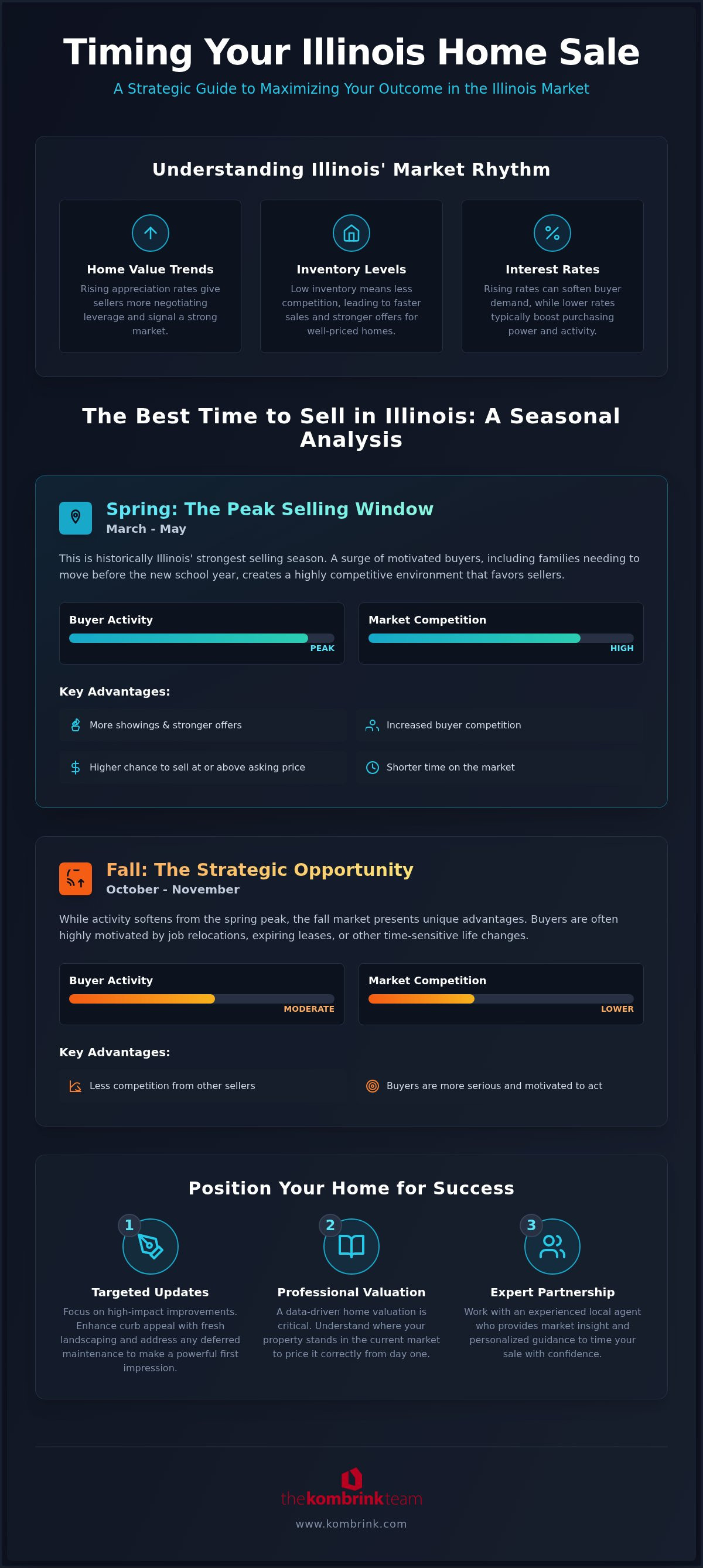
Three core indicators shape the selling environment at any given moment: home value trends, inventory levels, and interest rates. When appreciation rates are climbing steadily, sellers carry more negotiating leverage. When inventory is low, meaning fewer homes are competing for the same pool of buyers, well-priced listings tend to move faster and attract stronger offers. Interest rates add another layer of complexity. As borrowing costs rise, some buyers are priced out of the market or become more conservative with their offers, which can soften demand even during traditionally active months. Keeping a close eye on these indicators, ideally with the help of a local agent who tracks them regularly, gives you a clearer read on what to expect before you commit to a list date.
Urban and suburban markets also behave differently. Chicago-area properties often respond more sharply to interest rate fluctuations due to higher price points, while suburban and exurban communities in Northern Illinois tend to see steadier, more predictable demand driven by lifestyle priorities like school districts, lot size, and commute access.
Seasonal Trends in Home Selling
Seasonality plays a meaningful role in Illinois real estate. Buyer activity generally builds through late winter, peaks in late spring and early summer, then gradually softens heading into fall. Historically, listings that hit the market between April and June tend to see stronger competition among buyers, shorter days on market, and sale prices that track closer to, or above, asking price.
That said, selling outside peak season isn't without its advantages. Fall listings face less competition from other sellers, and buyers active in October or November are often highly motivated, whether by a job relocation, a lease ending, or a life change that can't wait for spring.
Understanding these rhythms is a central part of determining the best time to sell a home in Illinois. The right timing depends on your local submarket, your home's specific appeal, and the broader economic climate at the moment you're ready to list. A personalized home valuation is one of the most effective first steps toward understanding exactly where your property stands in the current market.
Best Months to Sell Your Home in Illinois
Not all months are created equal when it comes to selling residential real estate in Illinois. While national real estate guides often paint seasonal trends with a broad brush, the reality for Illinois homeowners is more nuanced. Local buyer behavior, weather patterns, and regional economic cycles all shape how different times of year perform, and understanding those distinctions is where sellers gain a real edge.
Here's how each season typically plays out across Northern Illinois, and what you can do to work with the market rather than against it.
Spring: The Peak Window
Spring is widely regarded as the strongest selling season in Illinois, and for good reason. As temperatures climb from March through May, buyer activity surges. Families with school-age children want to close before summer, and buyers who paused their searches over winter return to the market with renewed urgency. That combination of motivated buyers and rising inventory creates a competitive environment that tends to favor sellers.
Listings that hit the market between late March and mid-May historically attract more showings, generate stronger offer activity, and sell closer to, or above, asking price compared to other times of year. Timing your list date to land in this window, rather than drifting into late spring when competing inventory thickens, is one of the most practical decisions you can make.
Spring Selling Strategies
Preparation is everything in a spring market. Buyers are comparing multiple homes simultaneously, so first impressions carry serious weight. Focus on curb appeal first: fresh mulch, trimmed landscaping, and a clean exterior go a long way after a long Illinois winter. Inside, address any deferred maintenance items before listing, since spring buyers tend to be detail-oriented and well-informed.
From a marketing standpoint, professional photography scheduled on a bright, clear day can dramatically elevate your listing's online presentation. Most buyers begin their search digitally, so high-quality visuals are non-negotiable. Listing on a Thursday or Friday gives your home maximum exposure heading into the weekend, when showing activity peaks.
Summer: Momentum with Caveats
June and early July can still deliver strong results, particularly for homes with appealing outdoor spaces. Buyers who didn't find what they were looking for in spring remain active, and longer daylight hours mean more flexible showing windows. That said, demand does soften as summer progresses. Families become preoccupied with vacations and back-to-school preparations, and the urgency that defines the spring market begins to ease.
Navigating Summer Sales
If you're listing in summer, lean into what the season offers. Stage outdoor spaces intentionally: clean patio furniture, potted plants, and a well-maintained lawn signal that the home has been cared for. Open houses on weekend mornings, before the afternoon heat sets in, tend to draw better foot traffic.
Pricing discipline matters more in summer. As buyer demand softens, overpriced listings sit longer, and extended days on market can create the perception that something is wrong with the property. A well-calibrated list price, grounded in current comparable sales, keeps your home competitive without leaving money on the table.
Fall: Focused Buyers, Less Competition
September and October bring a quieter but genuinely productive selling window. Inventory drops as many sellers pull back, which means your home faces less direct competition. The buyers still active in fall are typically serious and motivated; they're not browsing casually. A job relocation, a lease ending, or a life change is driving their search, and that urgency often translates into cleaner, faster transactions.
Lean into fall's visual appeal. Warm exterior lighting, seasonal landscaping touches, and cozy interior staging can make a strong emotional impression during this time of year. Pricing should reflect the smaller buyer pool, but that doesn't mean discounting aggressively. It means being precise.
Winter: A Smaller Stage, Serious Players
Winter is the slowest season for Illinois real estate, but "slow" doesn't mean "unproductive." Sellers willing to list in November through February face minimal competition, and the buyers who are searching in cold weather are almost always highly motivated. Showings may be fewer, but conversion rates among serious buyers can be surprisingly strong.
The key in winter is presentation: ensure walkways are clear, lighting is warm and inviting, and the home feels genuinely comfortable during showings. Virtual tours and detailed listing descriptions become especially valuable when buyers are less inclined to tour in person during harsh weather.
Determining the best time to sell a home in Illinois ultimately comes down to your specific home, your local submarket, and your personal timeline. Understanding where your property stands in the current market is the clearest starting point, and a personalized home valuation from the Kombrink Team gives you that foundation before you commit to a season or a list date.
Preparing Your Home for Sale
Knowing the best time to sell a home in Illinois is only half the equation. The other half is showing up to that market with a home that's genuinely ready to compete. Preparation isn't about spending lavishly on renovations; it's about making smart, targeted decisions that protect your equity and strengthen your position with buyers.
Home Valuation and Repairs
Before you schedule a single showing, get a professional home valuation. This isn't a formality. It's the foundation every other decision rests on. A current, accurate valuation tells you where your home stands relative to comparable properties in your submarket, which repairs are worth addressing, and what price range is realistic given today's market conditions. Without it, you're guessing, and guessing costs money.
Once you understand your home's current value, focus repairs on the areas that move the needle most:
- Mechanical systems: HVAC, water heater, and electrical issues are common inspection flags. Addressing them before listing removes buyer leverage and reduces the risk of a deal falling apart after an offer is accepted.
- Kitchens and bathrooms: Full renovations rarely deliver dollar-for-dollar returns. However, cosmetic updates like fresh cabinet hardware, new faucets, and re-caulked tile are low-cost improvements that make a strong visual impression.
- Paint and flooring: Neutral, freshly painted walls and clean or refinished flooring are consistently among the highest-ROI updates a seller can make. They signal care without polarizing buyers with personal taste.
- Curb appeal: First impressions form before a buyer walks through the door. Clean gutters, a freshly painted front door, and tidy landscaping set a tone that carries through the entire showing.
The goal isn't perfection. It's removing the friction that gives buyers a reason to negotiate downward.
Staging and Marketing Your Home
Staging doesn't require hiring a professional, though it can help in higher price brackets. At its core, effective staging is about helping buyers picture their life in the space. Declutter aggressively, depersonalize shelves and walls, and ensure each room has a clear, obvious purpose. Furniture arrangement matters: oversized pieces can make rooms feel cramped, while appropriately scaled furnishings open up the space visually.
On the marketing side, professional photography is non-negotiable. The vast majority of buyers begin their search online, and listing photos are the first filter they apply. Poorly lit or low-resolution images will cost you showings before buyers ever consider the price.
Beyond the MLS, effective marketing today means reaching buyers where they already spend time. Your listing should have visibility across major real estate platforms, and social media distribution through your agent's channels can meaningfully expand your reach, particularly for lifestyle-driven properties with strong visual appeal.
A personalized home valuation from the Kombrink Team is the clearest starting point for understanding which preparation investments make sense for your specific property before you commit to a single dollar of improvements.
Working with a Real Estate Agent
Timing, preparation, and pricing all matter, but none of those elements reach their full potential without the right person guiding the process. Choosing an experienced local real estate agent is one of the highest-leverage decisions you'll make as a seller, and it's one that directly affects how well you execute on everything else covered in this guide.
An agent who knows your submarket, your neighborhood's buyer profile, and the current competitive landscape brings something no algorithm or national platform can replicate: genuine, localized judgment. That's especially true when you're trying to determine the best time to sell a home in Illinois, where conditions shift meaningfully from one corridor to the next.
Finding the Right Agent
Start with research, not referrals alone. A personal recommendation is a useful starting point, but it shouldn't be the only factor. Look for agents with a demonstrable track record in your specific area, not just the broader region. Review their recent sales history, check client testimonials across multiple platforms, and pay attention to how they communicate in their own marketing materials. An agent who presents their listings professionally is likely to present yours the same way.
Interview at least two or three candidates before committing. The conversation itself is revealing. Strong agents ask thoughtful questions about your timeline, your goals, and your property before they start talking about price. They listen before they advise. During those interviews, consider asking:
- How many homes have you sold in this zip code or neighborhood in the past twelve months?
- What's your average list-to-sale price ratio for recent transactions?
- How do you approach pricing strategy in a shifting market?
- What does your marketing plan look like beyond the MLS?
- How will you communicate with me throughout the process, and how often?
The answers matter less than whether they're specific and grounded. Vague, rehearsed responses are a signal worth heeding.
Understanding Commission and Fees
Commission structures in Illinois real estate are negotiable, and it's worth having a candid conversation about what's included before you sign a listing agreement. Rather than focusing narrowly on the percentage, ask what services are covered. Professional photography, marketing distribution, staging consultation, and open house coordination all represent real value, and the presence or absence of those services affects your outcome.
The goal isn't to minimize what you pay; it's to ensure what you pay delivers a return. An agent who commands a fair commission and executes at a high level will almost always net you more than a discount arrangement that leaves critical details unaddressed.
The Kombrink Team brings deep local expertise across Northern Illinois, combining comprehensive market analysis with personalized guidance tailored to your specific property and timeline. If you're ready to take the next step, request a home valuation from the Kombrink Team and start your sale with a clear, confident foundation.
Conclusion: Timing Your Sale for Success
Selling a home is one of the most consequential financial decisions you'll make, and the clarity you bring to that decision directly shapes the outcome. Throughout this guide, one theme has remained consistent: strategy matters as much as circumstance. The best time to sell a home in Illinois isn't a single date on the calendar. It's the intersection of seasonal opportunity, thoughtful preparation, and the right professional support.
Spring, particularly late March through mid-May, remains the strongest window for most Illinois sellers. Buyer demand is highest, competition among offers tends to be sharpest, and homes that show well move quickly. Summer carries momentum into June and early July before softening. Fall delivers a smaller but more focused buyer pool, and winter, while quieter, rewards sellers who are willing to list with minimal competition and highly motivated buyers on the other side of the transaction.
Beyond timing, the decisions you make before you list matter just as much. A professional home valuation grounds every other choice: which repairs to prioritize, how to price your home competitively, and what your realistic net proceeds look like. Preparation and presentation aren't optional extras. They're the difference between a listing that generates urgency and one that sits.
Working with an experienced local agent amplifies all of it. Local market knowledge, a disciplined pricing strategy, and professional marketing execution don't happen by accident. They're the product of expertise applied consistently on your behalf.
If you're weighing your options and not quite sure where to start, here's a simple framework:
- Start with your home's current value. A personalized valuation gives you a realistic baseline before any other decision is made.
- Align your timeline with market conditions. Your agent can tell you exactly how your submarket is performing right now, not six months ago.
- Prepare with purpose. Focus improvements on what buyers in your price range actually respond to, not what feels significant to you personally.
- Trust local expertise. Northern Illinois has its own rhythms, and a team that knows them intimately gives you a genuine edge.
The Kombrink Team brings deep roots in Northern Illinois real estate, comprehensive market analysis, and a genuine commitment to helping homeowners sell with confidence and clarity. Whether you're ready to list now or simply exploring your options, the right starting point is understanding exactly where your home stands today.
Request your personalized home valuation from the Kombrink Team and take the first step toward a sale you feel good about.
Your Next Move Starts Here
Choosing the best time to sell a home in Illinois isn't a single decision; it's a series of informed choices that build on each other. Timing matters. Preparation matters. And having a knowledgeable local partner in your corner makes both of those things work harder for you.
The Illinois market rewards sellers who come prepared, with a clear understanding of their home's current value, a realistic pricing strategy, and the right professional support to execute it all. Those aren't complicated requirements, but they do require the right guidance to get right.
The Kombrink Team brings proven residential sales experience, comprehensive market analysis, and deep local roots across Northern Illinois. Whether you're ready to list or simply figuring out your options, the team is here to help you move forward with confidence.
Contact the Kombrink Team for a personalized home selling strategy and take the first step toward a sale you'll feel good about from start to finish. You've got this.
Frequently Asked Questions
What is the best time to sell a home in Illinois?
The best time to sell a home in Illinois is generally between late March and mid-May, when buyer demand peaks and motivated families are actively searching before the school year ends. That said, the right timing for your specific property depends on your local submarket, your home's condition, and current inventory levels. A personalized market analysis from a local agent gives you a much clearer picture than seasonal generalizations alone.
How can I determine the right price for my home?
Pricing starts with a professional home valuation that compares your property against recent, comparable sales in your immediate area, not just your broader city or county. Overpricing is one of the most common and costly mistakes sellers make; homes that sit too long accumulate days-on-market stigma that weakens your negotiating position. Your agent should walk you through the comparable sales data and explain the reasoning behind a recommended list price before you commit to anything.
What are the common mistakes to avoid when selling a home?
The most frequent missteps include overpricing at launch, skipping pre-listing repairs that buyers will flag during inspection, and underinvesting in photography and marketing. Sellers sometimes let emotional attachment drive pricing decisions rather than market data, which almost always results in price reductions later. Choosing an agent based solely on who suggests the highest list price is another trap worth avoiding; that number needs to be grounded in real comparable sales.
How long does it typically take to sell a home in Illinois?
Time on market varies considerably depending on price point, location, and the season you list. Well-priced homes in active Northern Illinois submarkets during spring can move in a matter of days, while properties listed in slower seasons or at aggressive price points may take several weeks or longer. Your agent's knowledge of current absorption rates in your specific neighborhood is the most reliable guide to setting realistic timeline expectations.
Should I stage my home before selling it?
Yes, staging meaningfully improves how buyers respond to a property, even when it's as simple as decluttering, depersonalizing, and rearranging furniture to make rooms feel more spacious. Professional staging services can be especially valuable at higher price points where buyer expectations are elevated. At minimum, every seller should ensure each room has a clear purpose and that personal items aren't distracting buyers from picturing themselves in the space.
What documents do I need to prepare for selling my home?
You'll typically need your property deed, recent mortgage statements, property tax records, HOA documents if applicable, and any permits or warranties tied to improvements you've made. Illinois also requires specific seller disclosure forms that outline known material defects with the property. Your real estate agent and closing attorney will guide you through the complete documentation checklist, but gathering these records early prevents delays once you're under contract.
How does the local market affect my home sale?
Local market conditions directly shape your pricing power, how quickly you'll receive offers, and how much negotiating leverage you hold. In a low-inventory environment, sellers typically see stronger offers with fewer contingencies. When supply is high relative to demand, buyers have more options and more room to negotiate. Northern Illinois markets don't always move in sync with national trends, which is why working with an agent who tracks your specific submarket regularly is genuinely worth it.
Disclaimer
This article is provided for general informational purposes only and is not intended as legal, tax, financial, or mortgage advice. Real estate laws, market conditions, rates, and individual circumstances can change. Consult the appropriate licensed professional regarding your specific situation.
Enjoy this blog post? Click here to subscribe for updates
Leave A Comment