

How to Sell Your Home in Illinois in 2026

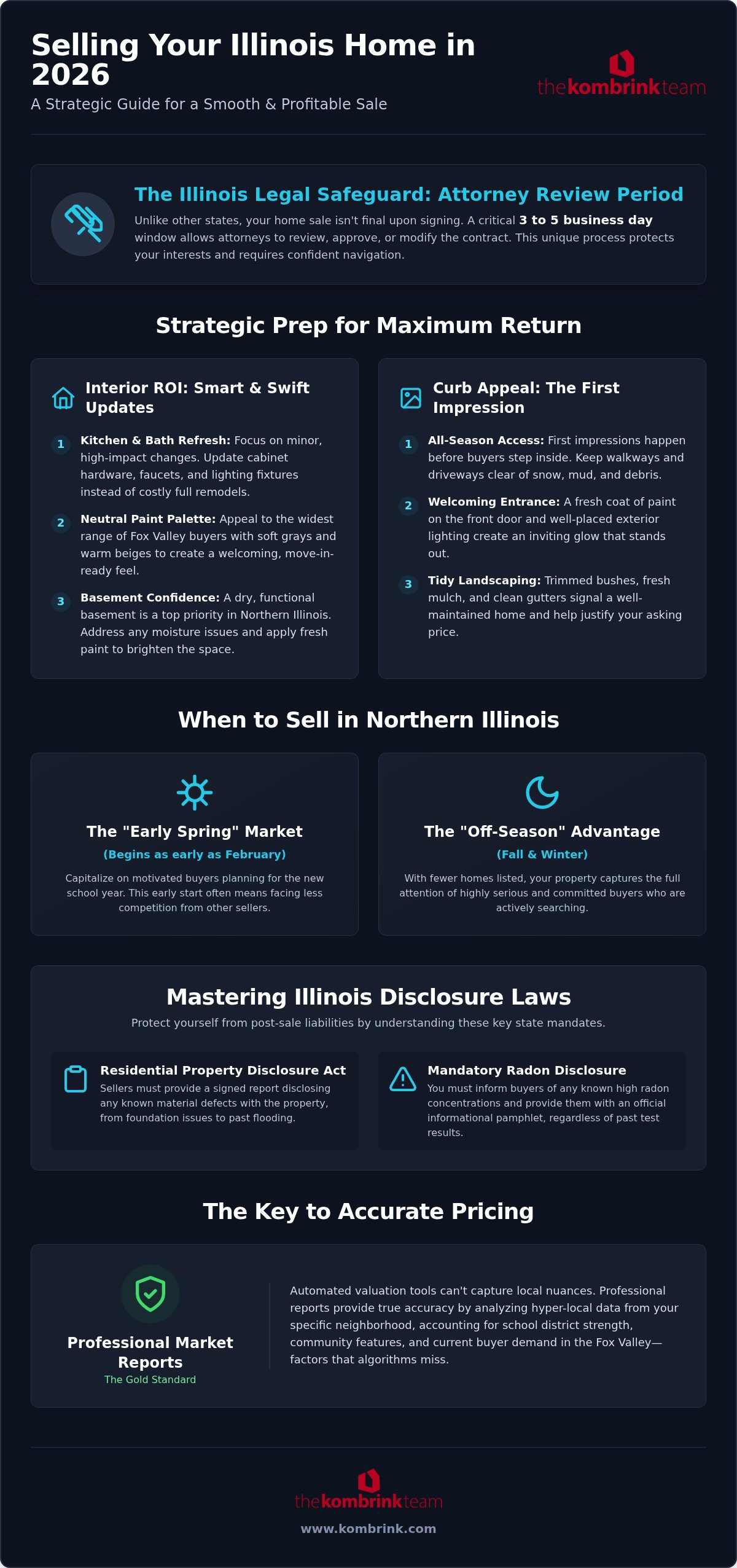
Did you know that in Illinois, your home sale isn't truly secure until a specific three to five-day legal window closes? This attorney review period often feels like a high-stakes waiting game, especially when you're already managing the emotional weight of a major life transition. It's perfectly normal to feel a sense of uncertainty about state disclosure laws or which specific repairs will actually drive your final sale price higher. We understand that you want more than just a sign in the yard; you want the peace of mind that comes with a smooth, compliant, and profitable transaction. These 2026 home selling tips Illinois are designed to provide the steady hand you need to move forward with total confidence.
You deserve a partner who views your sale as a significant milestone rather than just another listing. In this guide, we'll share professional strategies to master the complexities of our local market. You'll learn how to prepare your property for a digital-first impression, price it accurately using localized data, and stay ahead of the legal timeline. We'll walk through the preparation, pricing, and compliance steps necessary for a stress-free closing. Let's look at how you can turn the unique challenges of the Illinois real estate market into your greatest advantage.
Key Takeaways
- Identify the high-ROI interior updates and curb appeal improvements that resonate most with 2026 buyers in the Chicagoland area.
- Protect yourself from post-sale liabilities by mastering the legal requirements of the Illinois Residential Real Property Disclosure Act and mandatory radon testing.
- Learn why professional market reports provide the nuanced accuracy that automated valuation tools simply cannot match in our local neighborhoods.
- Use these proven home selling tips Illinois to navigate the state's unique five-day attorney review period and inspection negotiations with confidence.
Table of Contents
- Navigating the Illinois Real Estate Market Landscape in 2026
- Strategic Home Preparation: High-ROI Improvements for Illinois Sellers
- Essential Illinois Disclosure Laws and Legal Requirements
- Pricing Strategy: How to Value Your Home for a 2026 Sale
- The Illinois Closing Journey: From Attorney Review to Sold
Navigating the Illinois Real Estate Market Landscape in 2026
What does the real estate landscape actually look like right now in Northern Illinois? In 2026, the market is defined by a delicate balance between inventory levels and shifting buyer purchasing power. While national news outlets often focus on broad trends, the reality in the Chicagoland suburbs is far more specific. Inventory remains relatively tight in high-demand areas, which keeps competition steady among buyers. Interest rate shifts have certainly influenced how much a family can afford, but the fundamental desire for quality housing in established communities hasn't wavered. In places like Geneva and St. Charles, the strength of the local school districts continues to provide a layer of property resilience that isn't found in every market.
The Best Time to Sell in Northern Illinois
Have you ever wondered why for-sale signs appear while there is still snow on the ground? In our local suburbs, the "Spring Market" frequently begins as early as February. Buyers who spent the winter months planning their next chapter are often the most motivated to find a home before the summer rush. This early start allows families to settle in before the new school year begins. However, there is also a significant advantage to listing during the traditional "off-season." When fewer homes are on the market, your property faces less competition and captures the full attention of serious buyers. Utilizing specialized market reports can help you identify the exact "sweet spot" for your specific street, ensuring you don't miss a window of high demand.
Local Market Trends in the Fox Valley Area
What are today's buyers prioritizing in the Fox Valley? We are seeing a distinct preference for "move-in ready" homes over properties that require extensive work. Many residents in Batavia and Geneva now balance hybrid work schedules, meaning they value functional home offices and updated living spaces that don't require immediate weekend projects. This makes strategic preparation one of the most vital home selling tips Illinois residents can implement. Because remote work trends have stabilized, the Fox Valley has maintained its status as a premier destination for those seeking a blend of community charm and modern convenience. Relying on localized data is the only way to truly understand these nuances. National headlines simply cannot capture the unique pulse of our local neighborhoods or the steady value provided by our community pillars.
Strategic Home Preparation: High-ROI Improvements for Illinois Sellers
How do you ensure your home stands out in a market as competitive as the Fox Valley? Implementing the right home selling tips Illinois residents need for 2026 starts with understanding the local buyer's mindset. Preparing your home for sale in Illinois requires a strategic approach that accounts for our unique climate and buyer expectations. Local buyers in Northern Illinois often prioritize a dry, functional basement as much as a modern kitchen. If your basement shows signs of past moisture or remains unfinished, addressing these issues or simply brightening the space with fresh paint can significantly impact buyer confidence. High-quality preparation is about more than just aesthetics; it's about providing the peace of mind that the home has been meticulously maintained.
Exterior Prep for Every Season
Curb appeal is the primary driver of showing requests. Whether you're listing during a muddy Illinois spring or a snowy winter, maintaining the exterior is vital. Clear the snow from walkways and keep the driveway salted to ensure safe access. In the evening, well-placed lighting around the front door creates a warm, welcoming glow that stands out during our shorter winter days. A fresh coat of paint on the front door in a classic color can make the entire property feel more established and cared for. These small details signal to a buyer that the home is ready for a seamless transition.
Interior ROI: Where to Spend Your Budget
Which updates actually put more money in your pocket? In the Chicagoland market, full-scale renovations rarely return their entire cost, but minor "refreshes" are incredibly effective. Focus on the kitchen and primary bathroom by updating hardware, faucets, or lighting fixtures. Neutral paint colors, such as soft grays or warm beiges, are highly recommended for the Fox Valley demographic because they allow buyers to envision their own furniture in the space. This is particularly true in communities like Geneva and St. Charles, where traditional charm meets modern living.
The psychological impact of professional staging shouldn't be underestimated. Staging helps define the purpose of each room, making the home feel larger and more functional. It moves the focus from your personal life to the potential life of the buyer. This "depersonalization" process, combined with a thorough decluttering, is one of the most effective home selling tips Illinois homeowners can follow. Because 2026 buyers often start their search on a smartphone, your home must look impeccable in high-resolution photography. If you're unsure where to start with your specific layout, getting a professional home valuation report can help clarify how your home's current condition compares to recently sold properties in your neighborhood. By focusing on these high-impact areas, you'll maximize your sale price while minimizing the time your home spends on the market.
Essential Illinois Disclosure Laws and Legal Requirements
How do you protect yourself from legal surprises after the moving truck has left? Selling a home is a marketing sprint, as we discussed earlier, but it's also a legal marathon that requires absolute transparency. One of the most vital home selling tips Illinois homeowners should embrace is the "disclose, don't hide" philosophy. In our state, the law is designed to protect both parties, and being thorough now prevents stressful litigation later. Maintaining a high standard of honesty isn't just about following the rules; it's about providing the peace of mind that allows a buyer to commit with confidence.
Navigating the Disclosure Form
The Illinois Residential Real Property Disclosure Act is the cornerstone of this process. This document contains over 23 specific questions regarding the condition of your home, from the integrity of the foundation to the age of the roof. A "material defect" is essentially any condition that would have a substantial adverse effect on the value of the property or the health and safety of its occupants. Sellers often make mistakes by assuming they only need to disclose current problems. However, you must also be clear about past issues and the repairs performed to resolve them. Common errors include:
- Failing to mention a past basement leak because it was fixed years ago.
- Assuming that selling a home "as-is" waives your duty to disclose known defects.
- Leaving questions blank rather than providing a detailed explanation.
By being upfront about the history of your property, you build a foundation of trust with potential buyers and create a smoother path to the closing table. This transparency often leads to fewer surprises during the professional inspection phase.
Radon and Environmental Concerns
In Northern Illinois, radon is an environmental factor that frequently appears during the inspection phase. Because our local soil often contains higher levels of this naturally occurring gas, many buyers will request a test as a standard part of their due diligence. Illinois law requires that the "Radon Testing Guidelines for Real Estate Transactions" pamphlet be provided to buyers before they are bound by a contract. This ensures every party is informed about the risks and the testing process.
You might choose to perform a proactive radon test before listing your property. This allows you to address any elevated levels quietly and professionally, rather than negotiating a credit under the pressure of a looming closing date. Similarly, if your home was built before 1978, you'll need to comply with federal lead-based paint disclosure requirements. This involves providing a specific disclosure form and a pamphlet titled "Protect Your Family from Lead in Your Home." While these steps might feel like a mountain of paperwork, they are actually your best defense. These home selling tips Illinois sellers rely on ensure that once the deal is done, it stays done, allowing you to move into your next chapter with total confidence.
Pricing Strategy: How to Value Your Home for a 2026 Sale
Is your home's online estimate actually accurate? While automated tools like "Zestimates" are convenient, they often fail to capture the nuanced reality of our local neighborhoods. These algorithms can't see your professional landscaping or understand the premium buyers pay for a specific street in downtown Geneva. Relying on an algorithm for your most significant financial asset is a risk you don't need to take. One of the most critical home selling tips Illinois homeowners should remember is that a professional, human-led valuation is the only way to ensure you don't leave money on the table or scare away buyers with an inflated price. A steady, expert hand in the pricing phase sets the tone for the entire transaction.
The Anatomy of a Professional Valuation
A true valuation goes far beyond a simple square footage calculation. It accounts for "invisible" value, such as a high-efficiency HVAC system or a recently replaced roof, which provides buyers with the peace of mind they crave. We also adjust for neighborhood-specific features that only a local expert would know. For example, being within walking distance of the Metra or a specific park in St. Charles can add tangible value that a national website simply won't recognize. To get a clear picture of your property's worth, you can request The Kombrink Team home valuation report to see how your home compares to the most recent sales in your specific area. This report provides the depth and context you need to make an informed decision.
Psychological pricing also plays a major role in your success. Listing at $499,900 instead of $500,000 isn't just an old retail trick; it's a strategic move to ensure you appear in search results for buyers who set their maximum budget at $500,000. If you list at $505,000, you might miss an entire segment of the market that would have loved your home. This level of detail is what transforms a standard listing into a successful sale.
Strategic Price Adjustments
The first 30 days your home is on the market represent your most powerful window of opportunity. This is when your listing has the most "newness" and captures the attention of the most motivated buyers. If you haven't received an offer within a specific timeframe, it's vital to have "tripwires" in place. These are pre-determined markers that signal it's time to adjust your strategy based on market feedback from showings and digital views. We also look at the "absorption rate," which tells us how many months of inventory are currently available in the Fox Valley. If homes are selling quickly but yours is sitting, the market is sending a clear message about the price. Understanding these signals allows you to stay in control of the process rather than feeling forced into a corner later. For a customized look at your home's potential, get your Home Valuation Report today.
The Illinois Closing Journey: From Attorney Review to Sold
Have you ever wondered why the first week after accepting an offer feels like such a whirlwind? In Illinois, the transition from "under contract" to "sold" is a carefully choreographed sequence of legal and logistical steps. These final home selling tips Illinois residents need to know focus on maintaining momentum while protecting your interests. This is the stage where a steady hand is most valuable, guiding you through the nuances of the attorney review and inspection contingencies with professional poise. You've done the hard work of preparing and pricing; now it's time to ensure the details are handled with precision.
The Attorney Review and Inspection Phase
The five-day attorney review period is a tradition unique to our state. During this time, your real estate attorney and the buyer's attorney review the contract to ensure all terms are fair and legally sound. This window is also when the buyer typically conducts their professional inspection. You might face requests for repairs or financial credits based on the inspector's findings. We often recommend negotiating credits for minor issues rather than making actual repairs; this simplifies the process and allows the buyer to choose their own contractors after closing. Having a local attorney who understands the Chicagoland area's specific customs is essential for a seamless experience.
While the legal review is underway, we also keep a close eye on the financing contingency. This involves tracking the buyer's mortgage commitment to ensure their lender is on schedule. A delay here can ripple through the entire timeline, so consistent communication between all parties is vital for your peace of mind. We act as your advocate, making sure the buyer's team stays on task so your closing date remains secure.
Logistics of the Final Move
As the closing date approaches, the focus shifts to the final move. You'll need to schedule the transfer of utilities and prepare the home for the final walkthrough. This walkthrough usually occurs within 24 hours of closing, where the buyer confirms the property is in the agreed-upon condition. It's important to distinguish between the "closing date," when the paperwork is signed and funds are transferred, and the "possession date," which is when the buyer actually receives the keys. Most residential sales in the Fox Valley involve "possession at closing," but unique circumstances can sometimes require a post-closing possession agreement.
Navigating these final details requires more than just a checklist; it requires a partner who is deeply invested in your success. To stay ahead of the curve in our local neighborhoods, get your custom Fox Valley market report today. By following these home selling tips Illinois, you've moved from preparation to a successful closing with total confidence, ready to begin your next chapter.
Your Successful Next Chapter in the Fox Valley
Similarly, for those considering a relocation toward the West Coast, Adria Chamberlain | Keller Williams High Desert provides dedicated real estate expertise for families moving to the High Desert and Inland Empire communities of California.
Since 1991, The Kombrink Team at One Source Realty has served as a steady hand for families throughout Northern Illinois. We provide the expert local market insights you need to navigate the Fox Valley with absolute confidence. Are you ready to discover the true value of your property in today's market? Get Your Professional Home Valuation Report to start your journey with the clarity and support you deserve. We're here to ensure your transition is smooth, profitable, and entirely stress-free. You've got a bright future ahead, and we're honored to help you reach it.
Frequently Asked Questions
Do I really need an attorney to sell my house in Illinois?
While state law doesn't strictly mandate an attorney, hiring one is the standard professional practice for residential sales in our region. Your attorney manages the critical five-day review period and ensures your legal interests are protected during the complex title transfer process. This provides a vital layer of security that helps you avoid post-closing disputes and ensures all state-specific requirements are met.
How long does it typically take to sell a home in Northern Illinois?
The time it takes to find a buyer varies by neighborhood, but many homes in the Fox Valley find a match within 30 to 45 days when priced accurately. In 2026, local inventory levels in Kane County continue to influence this timeline significantly. You'll often find that the most motivated buyers are active during the early spring market, which can lead to a faster contract date.
What are the most common closing costs for sellers in Illinois?
Sellers are usually responsible for state and county transfer taxes, title insurance fees, and their own legal representation. You'll also need to account for property tax prorations, which are unique to our state's "paid in arrears" system. These costs are typically deducted from your sale proceeds at the closing table, so you don't need to bring cash to the meeting.
Can I sell my home "As-Is" in Illinois and still be legally protected?
Selling a property "As-Is" is perfectly legal, but it doesn't exempt you from the Illinois Residential Real Property Disclosure Act. You're still required to be honest about any known material defects, such as foundation issues or past moisture in the basement. Following these home selling tips Illinois requirements ensures that you aren't held liable for undisclosed problems after the sale is finalized.
What is the Illinois Attorney Review period and how does it work?
The attorney review is a five-business-day window that begins immediately after both parties sign the purchase agreement. During this time, your legal counsel can suggest modifications to the contract language or address specific concerns raised by the buyer's team. This period acts as a professional safety net, allowing for a thorough review before the deal becomes legally binding.
How much does it cost to hire a real estate agent in Northern Illinois?
Professional representation is typically paid through a commission that is calculated as a percentage of the final sale price. This fee is settled at the closing table, meaning you don't have to worry about upfront costs for marketing, professional photography, or staging guidance. It's a performance-based partnership where your agent is invested in achieving the highest possible price for your home.
What documents do I need to have ready before listing my home?
You should gather your most recent property tax bill, your existing title insurance policy, and a copy of your plat of survey. Having these items organized alongside your signed disclosure forms allows for a much faster transition once you receive an offer. Being prepared prevents common logistical delays that can occur during the first week of the attorney review period.
Is radon mitigation required by law if a test comes back high?
Illinois law requires you to disclose known radon levels and provide an educational pamphlet to the buyer, but it doesn't mandate that you install a mitigation system. However, a high test result is a frequent negotiation point during the inspection phase. Many sellers choose to install a system or provide a closing credit to ensure the buyer feels comfortable moving forward with the purchase.
Disclaimer
This article is provided for general informational purposes only and is not intended as legal, tax, financial, or mortgage advice. Real estate laws, market conditions, rates, and individual circumstances can change. Consult the appropriate licensed professional regarding your specific situation.
Enjoy this blog post? Click here to subscribe for updates
Leave A Comment