

How Much Cash Do You Need to Buy a House? A Cash-to-Close Checklist

If you’re asking, “how much money do i need to buy a house,” remember that the down payment is only one part of the total. A 20% down payment isn’t always required, but inspections, closing costs, prepaid expenses, moving costs, and the savings you want to keep in reserve also belong in your plan.
This guide breaks down the main cash needs to consider before making an offer and shows how to build a savings target from written estimates rather than guesswork. We’ll separate purchase costs from ongoing homeownership expenses and explain why figures can differ from one property to another in Geneva, St. Charles, Batavia, and other Fox Valley communities.
Key Takeaways
- The answer to “how much money do i need to buy a house” depends on the home, financing, transaction terms, and your circumstances. Base your estimate on a specific purchase scenario.
- Budget separately for the down payment, closing expenses, inspections, moving, and initial home needs.
- Set a savings target by reviewing written estimates, totaling available funds, and keeping a reserve for after closing.
- Compare property-specific estimates as you consider Geneva, Batavia, St. Charles, Aurora, Naperville, and nearby communities.
Table of Contents: How Much Money Do I Need to Buy a House?
- Costs Beyond the Down Payment When Buying a House
- A Step-by-Step Checklist for Estimating Your Homebuying Cash
- Planning to Buy in the Fox Valley: Local Factors and Helpful Next Steps
Costs Beyond the Down Payment When Buying a House
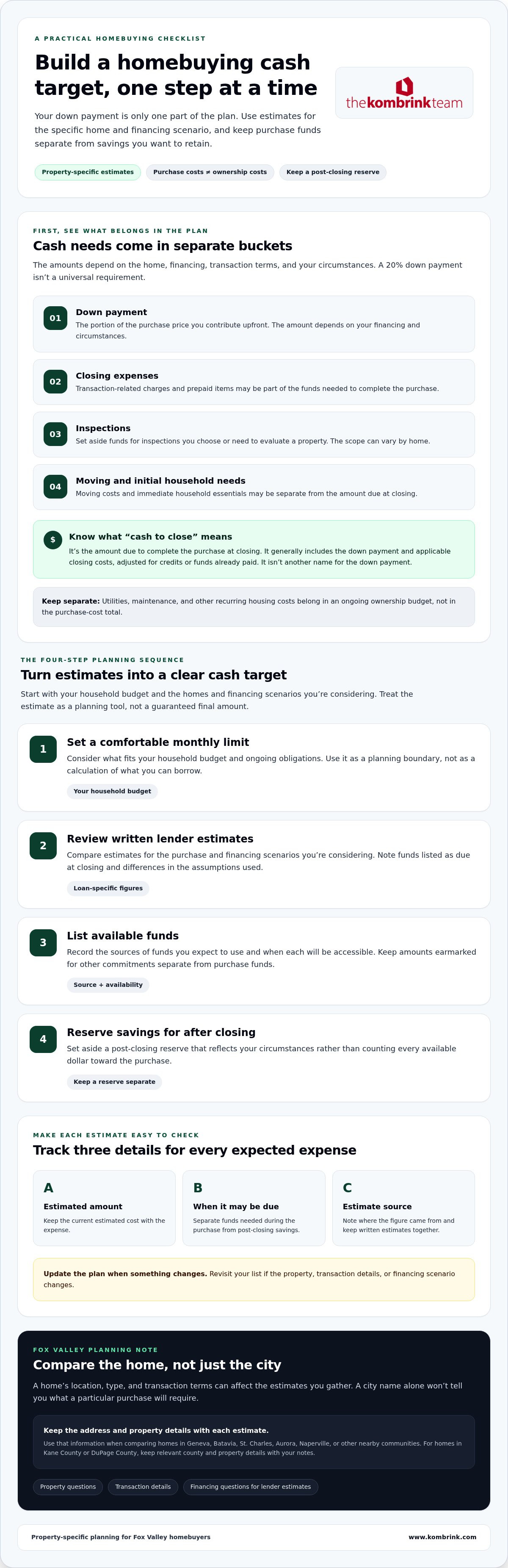
Total cash needs vary with the home, financing, transaction terms, and your circumstances. A 20% down payment isn’t a universal requirement, but the amount you put down is only one part of the budget. To answer how much money do i need to buy a house, account for the expenses tied to the specific purchase, not just the down payment.
How Much Money Do I Need to Buy a House? Start With Upfront Costs
Separate expenses due during the purchase from costs you may face after you own the home. Categories and amounts depend on the transaction, so use estimates that reflect the home and financing you’re considering.
- Down payment: The portion of the purchase price you contribute upfront. The amount depends on your financing and circumstances.
- Closing expenses: Transaction-related charges and prepaid items may be part of the funds needed to complete the purchase.
- Inspections: Set aside funds for inspections you choose or need to evaluate a property. The scope can vary by home.
- Moving and initial needs: Moving costs and immediate household essentials may be separate from the amount due at closing.
For a broader budgeting checklist, see what to save for when buying a home.
Cash to close is the amount due to complete the purchase at closing. It generally includes the down payment and applicable closing costs, adjusted for credits or funds already paid. It isn’t another name for the down payment. Utilities, maintenance, and other recurring housing costs belong in a separate ownership budget.
Don’t assume two purchases in Geneva, Batavia, St. Charles, or another Fox Valley community will have identical cash needs. Keep estimates tied to the specific property and transaction, and distinguish closing funds from money reserved for the first stretch of ownership. The Kombrink Team’s home buyer services provide guidance through the purchase process. Loan-specific figures are reflected in your lender’s written estimates.
A Step-by-Step Checklist for Estimating Your Homebuying Cash
There isn’t one figure that answers how much money do i need to buy a house for every buyer. Build your estimate around the monthly housing cost that feels comfortable and the specific homes and financing scenarios you’re considering. Written lender estimates provide loan-specific figures; this checklist helps you organize the information without treating it as financial advice.
- Set a comfortable monthly limit. Consider what fits your household budget and ongoing obligations. Use this as a planning boundary, not a calculation of what you can borrow.
- Review written lender estimates. Compare estimates for the purchase and financing scenarios you’re considering. Note the funds listed as due at closing and any differences in the assumptions used.
- List available funds. Record the sources of funds you expect to use and when each will be accessible. Keep amounts earmarked for other commitments separate from purchase funds.
- Reserve savings. Set aside a post-closing reserve that reflects your circumstances rather than counting every available dollar toward the purchase.
How Can You Turn Estimates Into a Realistic Cash Target?
For each expected expense, record the estimated amount, when it may be due, and where the estimate came from. Update your list if the property, transaction details, or financing scenario changes. The Consumer Financial Protection Bureau’s guide to owning a home offers additional consumer information to review alongside your lender’s written figures.
An estimate is a planning tool, not a guaranteed final amount. Keep the latest figures together and distinguish funds needed during the purchase from your post-closing reserve. The Kombrink Team’s buyer representation helps you understand transaction steps and organize property-specific questions as you compare homes.
Planning to Buy in the Fox Valley: Local Factors and Helpful Next Steps
As you compare Geneva, Batavia, St. Charles, Aurora, Naperville, and nearby communities, treat each home as its own budgeting scenario. A property’s location, type, and transaction terms can affect the estimates you gather, but a city name alone won’t tell you what a particular purchase will require. Keep the address and property details with each estimate so you’re comparing like with like.
What Local Guidance Can Add to a First Homebuying Budget
County context can help you organize property-specific questions. For a home in Kane County or DuPage County, keep relevant county and property details with your notes, and use estimates that apply to the home you’re considering rather than assumptions based on another community. If you’re weighing homes in different areas, separate questions about the property and transaction from financing questions addressed in your loan estimates.
The Kombrink Team’s complimentary buyer consultation gives you a place to discuss your local search and sort through process questions. Buyer representation can help organize property-related details and coordinate transaction steps, while your lender’s written estimates address loan-specific costs. The team serves buyers across the Fox Valley and Northern Illinois, including Geneva, Batavia, St. Charles, South Elgin, North Aurora, West Chicago, Elburn, Sugar Grove, Aurora, Elgin, Naperville, Wheaton, Bartlett, Bloomingdale, Campton Hills, Carol Stream, and DeKalb.
Before making an offer, review the notes for the specific home and identify unanswered questions. This makes comparisons across communities clearer without assuming that costs or transaction details are identical from one property to another.
Take the Next Step With a Clear Plan
Your homebuying plan doesn’t need to account for every possible surprise today. Start with the information you have, keep estimates organized, and refine your target as you focus on particular homes. If you’re still wondering how much money do i need to buy a house, a conversation about your search can help clarify which property and transaction questions to explore next.
The Kombrink Team has served Northern Illinois buyers since 1991 and has helped sell over 4,290 homes. A complimentary buyer consultation is a practical place to discuss the purchase process and your plans for the Fox Valley.
Frequently Asked Questions
Can I Use a Gift Toward My Down Payment or Closing Costs?
Possibly, depending on the financing and the lender’s requirements. Gift funds may need to meet specific documentation and handling requirements as part of the loan process. Include any expected gift in your planning, but don’t count on using it until its treatment is reflected in your loan process.
How Much Should I Keep in Savings After Buying a House?
There’s no single reserve amount that fits every household. Consider your income stability, regular expenses, and the home needs you may face after moving in. For example, keep planned purchases for the home separate from funds needed to complete the transaction. When deciding how much money do i need to buy a house, account for your comfort with unexpected costs.
Can Seller Credits Reduce the Cash I Need at Closing?
They may reduce some of the amount due at closing if included in the agreed transaction and allowed under the financing terms. Their availability and use depend on the specific deal and lender requirements, so don’t assume a credit will cover every expense or return cash to you. Any proposed credit should be reflected in the written estimate before you rely on it.
What Should I Bring to a Complimentary Home-Buyer Consultation?
Bring a short list of questions, the communities you’re considering, and a few priorities for your next home. A lender’s written estimate or preapproval information can help frame property-search questions, but it isn’t required to discuss the process. You can also share your preferred timing and features you’re deciding between, such as a townhome or single-family home.
Disclaimer
This article is provided for general informational purposes only and is not intended as legal, tax, financial, or mortgage advice. Real estate laws, market conditions, rates, and individual circumstances can change. Consult the appropriate licensed professional regarding your specific situation.
Enjoy this blog post? Click here to subscribe for updates
Leave A Comment