

What Higher Mortgage Rates Mean for Northern Illinois Home Prices

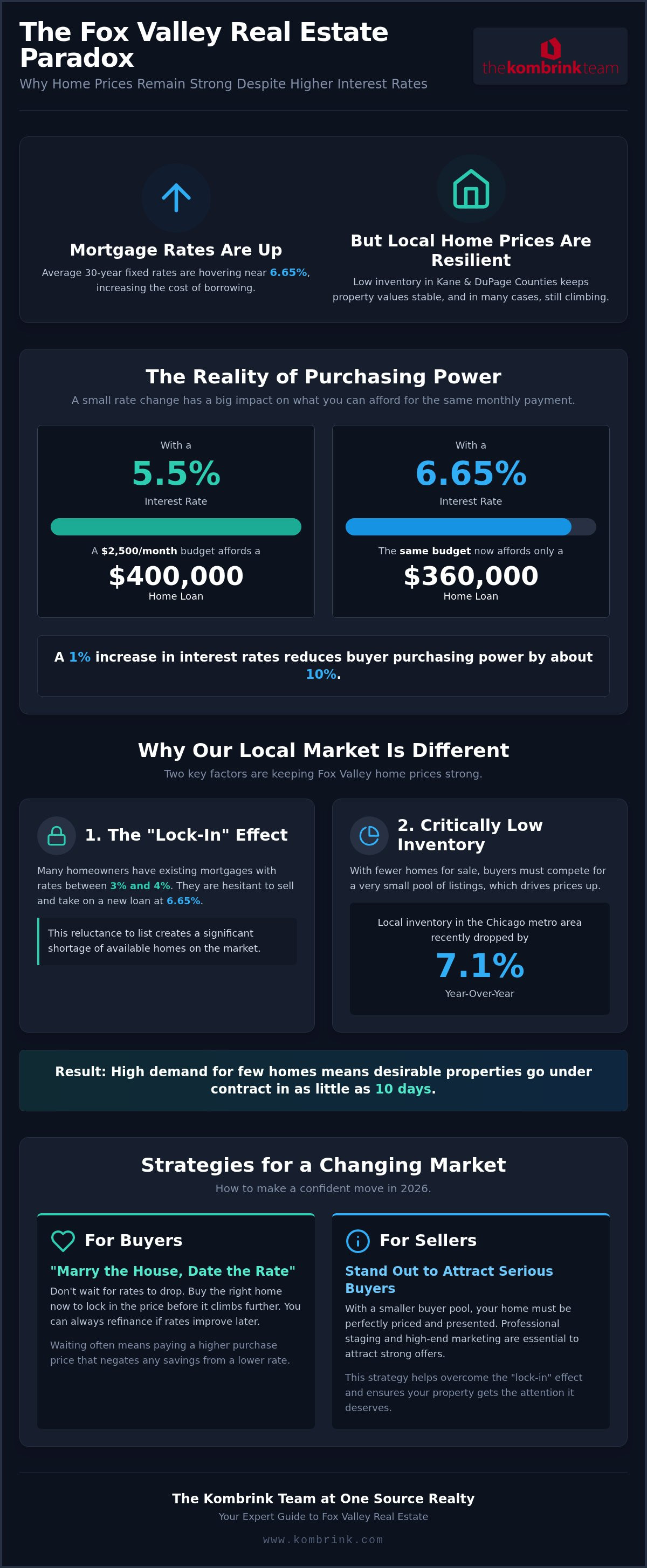
You might expect home prices in St. Charles or Batavia to tumble when interest rates climb, but the 2026 market is telling a very different story. It's often frustrating to watch average 30-year rates hover near 6.65% while local property values still climb, leaving many families worried they might overpay. Low inventory in Kane and DuPage Counties keeps prices resilient, so waiting for a crash often means missing out on equity gains.
This guide explains the specific mortgage rates effect on home prices across Northern Illinois so you can make your next move with peace of mind. We'll explore why our local market remains so stable and how you can use these trends to secure your financial future. You'll gain a clear strategy for buying or selling in this current environment without the typical stress of the unknown.
Key Takeaways
- Understand the mortgage rates effect on home prices and how a 1% shift significantly alters your monthly budget and long-term purchasing power.
- Discover why inventory shortages in St. Charles and Batavia keep property values stable even when borrowing costs rise.
- Learn how the lock-in effect impacts local listings and why your current home equity might be higher than you think.
- Identify practical strategies for 2026, including how to find "Coming Soon" listings and use professional valuations to make a confident move.
Table of Contents
- How Mortgage Rates Influence Home Prices and Purchasing Power
- Why Northern Illinois Prices Stay Resilient Despite High Rates
- Strategies for Buying and Selling in a Changing Rate Environment
How Mortgage Rates Influence Home Prices and Purchasing Power
Understanding how interest rates influence home prices is the first step for any buyer or seller in our local market. When the Federal Reserve adjusts borrowing costs to manage inflation, it directly impacts what you pay for a mortgage every month. While economic theory suggests that higher rates should cool demand and lower prices, the reality in Northern Illinois is often more nuanced. We've seen that even with the 30-year fixed rate at 6.65% in August 2026, local demand stays surprisingly steady.
A small change in rates carries a heavy weight for your monthly budget. Generally, a 1% increase in interest rates reduces a buyer's purchasing power by about 10%. This shifts the mortgage rates effect on home prices because it forces some buyers to look at lower price points or wait on the sidelines. However, prices don't always drop immediately because sellers often wait for rates to stabilize before listing their homes, which keeps the total supply low.
The Federal Reserve doesn't set mortgage rates directly, but their policies dictate the environment where lenders operate. When the Fed signals a stable approach, it creates a floor for Chicagoland mortgage interest rates. This environment can lead to a "wait and see" attitude among move-up buyers. This hesitation further tightens the supply of available homes, which often supports higher price tags despite the increased cost of borrowing.
The Reality of Purchasing Power in 2026
If you have a set monthly budget of $2,500, your total loan amount drops significantly as rates rise. A buyer might qualify for a $400,000 home at 5.5%, but that same monthly payment only covers roughly $360,000 at a 6.65% rate. Because of this, we're seeing many families in areas like St. Charles and Geneva shift their search from large single-family homes to high-end townhomes or condominiums. This transition helps them stay in their preferred communities without overextending their finances.
Why Northern Illinois Prices Stay Resilient Despite High Rates
National headlines often suggest that high interest rates should cause property values to plummet. In communities like Geneva, St. Charles, and Batavia, we see the opposite happening. The primary driver is the "lock-in" effect. Many local homeowners currently enjoy mortgage rates between 3% and 4%, making them very hesitant to trade that for a 6.65% rate on a new home.
This reluctance to list creates a significant shortage of available homes. Research from the CFPB on the impact of changing mortgage rates shows that when inventory is tight, the mortgage rates effect on home prices is often secondary to the pressure of limited supply. Even with fewer buyers in the market, those who remain are competing for a very small pool of listings. This often results in multiple offers, particularly in sought-after school districts like those in Naperville and Wheaton.
Supply vs. Demand in Kane and DuPage Counties
Local inventory across the Chicago metro area recently dropped by 7.1% year-over-year. This scarcity prevents the mortgage rates effect on home prices from causing the deep discounts some might expect in a more saturated market. In Carol Stream, buyers balance home values with local property taxes, yet demand remains high because there simply aren't enough houses to go around. We often see homes entering pending status in as little as 10 days because buyers are ready to act when the right property appears.
The stability of our local market is a testament to the desirability of the Fox Valley. While national trends provide a backdrop, our local schools and community amenities act as a buffer against broader economic shifts. If you're curious about how these local trends affect your own equity, you can request a free home valuation report to see where you stand in today's market.
Strategies for Buying and Selling in a Changing Rate Environment
Many buyers in 2026 feel paralyzed by the 6.65% interest rate, but waiting for a significant drop can be a costly mistake. We often suggest that you 'marry the house and date the rate.' This means finding the right property in Batavia or Elburn now and planning to refinance if rates dip later. For those who need a personalized approach to these complex financing scenarios, check out LoansByJB (The Nuhome Team). Because the mortgage rates effect on home prices is buffered by low inventory, buying today secures your place in the market before prices climb even further. Waiting often results in paying a higher purchase price later, which can negate any savings from a lower interest rate.
For sellers, the goal is to break through the mortgage rate lock effect that has kept many neighbors from moving. To attract serious buyers when the pool is smaller, your home must look its best and be priced perfectly. Professional staging and high-end marketing are no longer optional; they are essential tools to ensure your property stands out against the competition in Kane and DuPage Counties. Our team uses these strategies to maintain momentum and secure strong offers even when borrowing costs are higher than historical lows.
Success in this environment requires a steady hand and deep local roots. We recommend that you check current Chicagoland mortgage rates to set a realistic budget before you start touring homes. With over 30 years of experience and 4,290 homes sold, we know how to find private and coming soon listings that never hit the public portals. This "insider" access is a massive advantage for buyers struggling with low inventory.
Sellers should start with a free home valuation to understand their true equity. This report provides the clarity needed to price accurately, ensuring you don't leave money on the table while still attracting qualified buyers. Whether you are moving up or downsizing, having a seasoned mentor by your side makes every step of the process feel seamless and secure. We focus on your specific goals to ensure the mortgage rates effect on home prices doesn't hinder your transition.
Take the Next Step with Confidence
While the mortgage rates effect on home prices is a significant factor in your monthly budget, it doesn't have to stall your dreams. In Northern Illinois, our resilient local market proves that quality homes in Kane and DuPage Counties remain excellent long-term investments. By focusing on your specific needs and leveraging current equity, you can move forward without the fear of overpaying or missing out on the right property.
The Kombrink Team brings over 30 years of local experience and a track record of more than 4,290 homes sold to your side. We pride ourselves on providing the steady hand and 5-star service you need to navigate any market shift. When you're ready to see what your home is worth or find your next perfect fit, get your free home valuation report from The Kombrink Team today. We look forward to helping you make a move you'll love for years to come.
Frequently Asked Questions
Do home prices always go down when mortgage rates go up?
No, home prices don't always drop when rates rise. In our local area, the supply of homes is currently so low that it counteracts the mortgage rates effect on home prices by keeping demand higher than supply. If there are ten buyers for every house, prices will likely remain stable or continue to climb even if interest rates are higher.
Is 2026 a good year to buy a home in Northern Illinois?
2026 is an excellent year to buy if you're focused on long-term stability rather than timing the market. Waiting for rates to fall often means competing with a flood of new buyers, which typically drives prices higher. By buying now, you avoid future bidding wars and begin building equity in a community known for its consistent property value growth.
How do high interest rates affect my home's equity in Kane County?
High interest rates haven't negatively impacted equity for most Kane County homeowners because the demand for our neighborhoods remains high. While rates might limit how fast your home's value grows, the lack of new listings helps maintain a strong floor for pricing. Most residents find that their equity stays protected because buyers still prioritize our local school districts and amenities.
What happens to the housing market if mortgage rates drop suddenly?
If rates drop suddenly, we expect a rapid increase in buyer demand that would likely push home prices up quickly. This shift often turns a balanced market into a fierce seller's market overnight. When this happens, the mortgage rates effect on home prices is a swift boost in valuation, rewarding those who purchased when rates were higher and competition was lower.
Disclaimer
This article is provided for general informational purposes only and is not intended as legal, tax, financial, or mortgage advice. Real estate laws, market conditions, rates, and individual circumstances can change. Consult the appropriate licensed professional regarding your specific situation.
Enjoy this blog post? Click here to subscribe for updates
Leave A Comment